
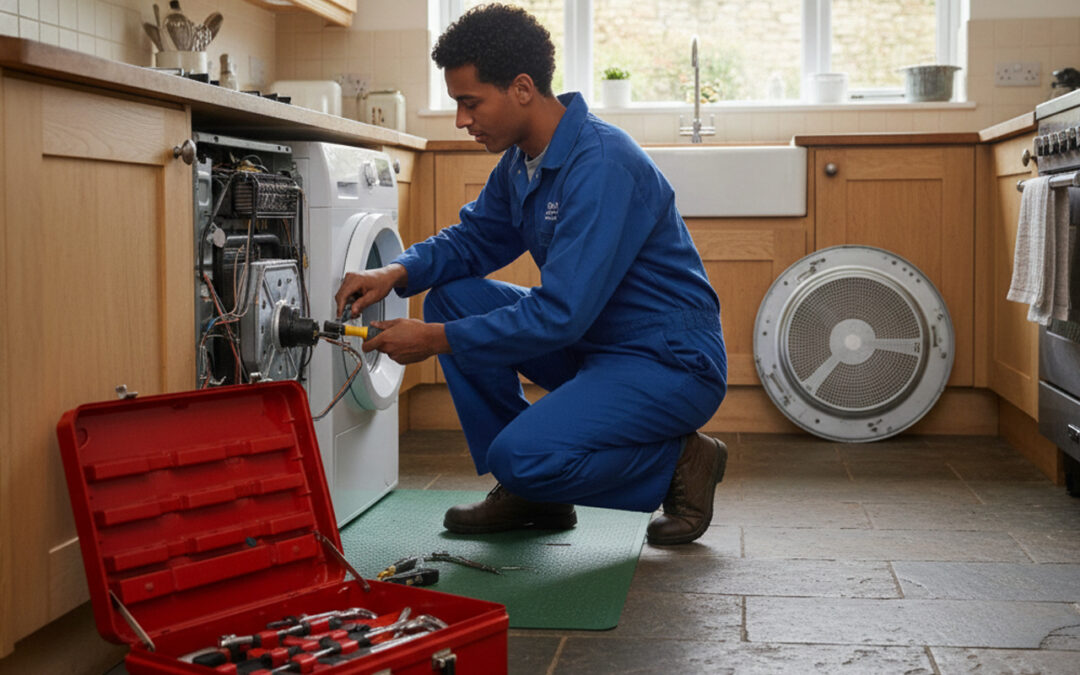
A tumble dryer that runs but leaves clothes damp is one of the most frustrating appliance problems. You wait through a full cycle, unload the drum, and find everything still cold or slightly wet. Many people assume the dryer is dying. In reality, poor drying performance usually comes from airflow, heat, or sensor problems that can often be repaired.
Why drying performance drops
Drying relies on three things working together. Heat, airflow, and moisture detection. If one of these fails, the machine can no longer remove water effectively.
- Blocked condenser or lint system
- Weak heating element
- Faulty moisture sensors
- Broken fan or airflow duct
- Overloaded drum
- Control board errors
In many cases, more than one issue is present. For example, a blocked filter can cause overheating, which damages sensors over time.
How engineers diagnose drying problems
Diagnosis starts with airflow checks. Lint buildup is responsible for a large number of drying complaints. Engineers then test heat output and sensor readings. Modern dryers rely heavily on moisture sensors to determine when clothes are dry. If these fail, the dryer may stop early or run cold.
On condenser and heat pump dryers, water circulation systems are also tested.
Typical UK repair costs
- Full service and airflow cleaning: £60 to £100
- Heating element replacement: £110 to £190
- Moisture sensor replacement: £70 to £130
- Fan motor replacement: £120 to £220
- Control board replacement: £160 to £320
- Call-out fee: £40 to £70
Most drying issues are resolved for between £90 and £180.
When poor drying becomes expensive
Leaving a dryer in poor condition can cause knock-on damage. A clogged system forces the heater to work harder. Sensors become unreliable. Motors overheat. What starts as a £70 clean can turn into a £250 electrical repair.
That is why poor drying should never be ignored.
Repair or replace decision
If your dryer is under 8 years old, poor drying is almost always worth fixing. Older machines may still be repairable, but costs should be weighed against efficiency. Modern dryers use less electricity and dry faster.
For older models, compare with old tumble dryer repair costs.
Common mistakes that cause damp laundry
- Overloading the drum
- Mixing thick and thin fabrics
- Not cleaning filters
- Ignoring warning lights
- Running short cycles
Sometimes the dryer itself is fine and the problem is usage.
Related cost guides
- Tumble Dryer Not Heating. Repair Cost Breakdown
- Condenser Tumble Dryer Repair Costs
- Heat Pump Tumble Dryer Repair Costs Explained
Final thoughts
Drying problems are often caused by simple faults. Many can be fixed quickly and cheaply. The key is early diagnosis. Leaving it too long often makes repairs more expensive.
You can request free quotes from local engineers on our homepage.